

How She Looks at 100
- Visit North Central
What do you imagine you will look like at 100? Or your home will look like at 100? We all hope it will be as wonderful as FAM, the Fitchburg Art Museum.
This year marks a hundred years for Fitchburg Art Museum, located in the North of Main neighborhood of downtown Fitchburg. This milestone is the story of conviction and class.
Founded in 1925 through the bequest of American artist Eleanor Augusta Norcross, the Fitchburg Art Museum stands today as one of the oldest cultural institutions in North Central Massachusetts. Over the past hundred years, it has grown from a modest art center into a dynamic, community-embedded museum with a collection of more than eight thousand works. Yet its founding impulse remains remarkably intact—a belief in art as a public good, inseparable from civic life.
That belief belonged to Norcross, a painter, philanthropist, and lifelong advocate for the power of art to enrich everyday experience.
A Female Founder Ahead of Her Time
Born in Fitchburg in 1854, Eleanor Norcross came from a prominent local family. Her father, Amasa Norcross, served as the city’s first elected mayor. But Eleanor’s ambitions extended far beyond local politics or social standing. She pursued formal artistic training at what is now the Massachusetts College of Art and Design in Boston, later continuing her studies at the Art Students League in New York.
At the encouragement of her teacher, the celebrated American painter William Merritt Chase, Norcross moved to Paris in 1883. There, she established herself as a professional artist, painting portraits and interiors in an Impressionist style and assembling an extensive personal art collection. Her tastes reflected a deep engagement with European works on paper and the decorative arts—fields often dismissed as secondary at the time but now recognized as central to art history.
Norcross never married. Instead, she used her life’s time to help her hometown. She conceived of her own art collection—and her resources—as tools for public benefit. When she died in 1923, she left behind not only her artworks and paintings but also some financial means to kick off the budding idea of an art museum in her hometown.
Her motivation was explicit and radical for its era: she believed that exposure to the fine arts improved the lives of working people and their families. Like many nineteenth-century arts philanthropists, Norcross viewed cultural access as essential to civic health. But unlike many of her contemporaries, she insisted that such access should exist outside elite urban centers.
Fitchburg, she believed, deserved the same as Boston, Worcester, or Springfield in terms of the arts and humanities.
The Change from Art Center to Art Museum
The institution Norcross imagined took shape slowly. The Fitchburg Art Museum was legally incorporated on December 31, 1925 and opened its first galleries to the public in 1929 in the historic Merriam Parkway Building in downtown Fitchburg.
In its early decades, the institution operated under the name Fitchburg Art Center, mounting exhibitions of international, national, and local artists while steadily growing its collection. It also functioned as an educational hub, offering classes for children and adults and serving as a social gathering place for a growing community of arts supporters.
Leominster artist Luann Hume (b. April 12, 1939, d. January 26, 2026) once noted how she started her love of art at the museum, “From when I was nine, I spent many Saturdays taking the bus to Fitchburg Art Museum to take art classes. I had many joyful hours drawing and painting and beginning to learn my craft. I prayed for more Saturdays in the month,” she said, “so that I could keep learning and creating.”
After successfully navigating the austerities of World War II, the institution formally became the Fitchburg Art Museum in 1951, a change overseen by then-director Zaydee DeJonge Harris. The new name reflected both its expanding ambitions and its increasing regional stature.
Enduring into the Future
Few figures shaped the museum’s physical and institutional growth more than FAM’s ninth director, Peter Timms of Ashburnham, who led the museum for thirty-nine years from 1973 to 2012—one of the longest tenures of any art museum director in the United States.
Under Timms’s leadership, the museum more than tripled in size to forty thousand square feet through new construction and the acquisition and renovation of adjacent buildings. He also oversaw a successful capital campaign that built a sustaining endowment, ensuring the museum’s long-term stability.
Just as significantly, Timms championed education as central to the museum’s mission. In 1995, FAM partnered with Fitchburg Public Schools to create the Partnership School, an innovative arts-magnet middle school where all academic subjects were taught in museum galleries using an arts-integrated, collection-based curriculum. The program, which ran for more than a decade, taught more than two hundred students annually, reduced dropout rates, and drew national attention. During that period, the museum adopted a tagline that still resonates: “A Museum with a School at its Heart.”
The NOW: A Community Museum
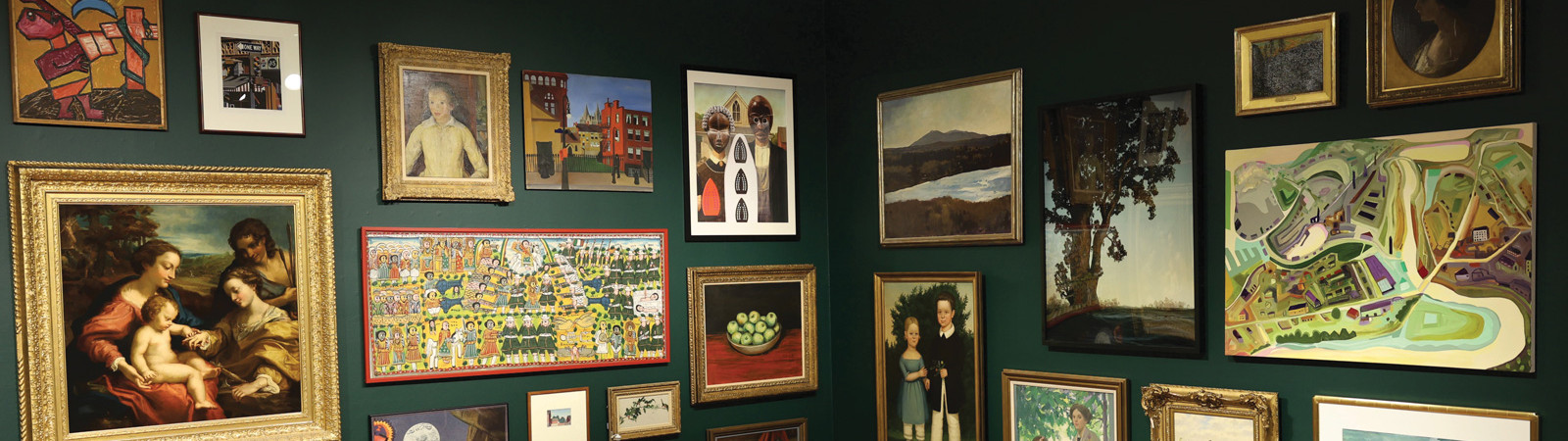
Since 2012 under the leadership of its tenth director, Nick Capasso of Harvard, Fitchburg Art Museum has continued to evolve while remaining deeply rooted in community engagement. The collection has grown to more than eight thousand works with notable strengths in American art, African art, and photography alongside a renewed commitment to contemporary New England artists, the Latinx community surrounding the museum, and a focus on contemporary curation.
The museum maintains close partnerships with Fitchburg Public Schools, Fitchburg State University, Mount Wachusett Community College in Gardner, and numerous local organizations. It has also taken an active role in community development, collaborating with NewVue Communities to help create the Fitchburg Arts Community—sixty-eight units of artist-preference affordable housing located directly across the street from the museum.
During the COVID-19 pandemic, FAM extended its civic role even further, working with Fitchburg Public Schools to launch Fitchburg Families First, a program designed to address basic human needs for families in the school system during the city’s most difficult months.
The museum is also one of the country’s first —and almost only—to operate fully and be completely committed to bilingual English/Spanish programming, reflecting and welcoming Fitchburg’s substantial Latinx population.
A Centennial Grounded in Founding Values
As Fitchburg Art Museum enters its second century, it does so in a way that echoes Eleanor Norcross’s original vision. To mark its four-year centennial period from 2026 to 2029, the museum has made admission free for all visitors, thus removing financial barriers between the public and its collections. If the program proves sustainable, free admission will become a permanent policy.
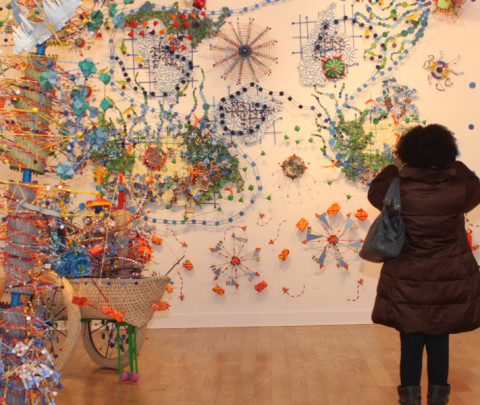
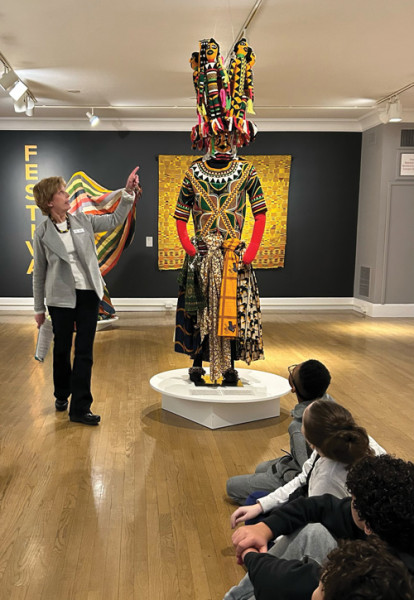
Centennial exhibitions draw directly from the Permanent Collection Norcross helped make possible. FESTIVAL: A Celebration of African Art at FAM brings together traditional and contemporary works from across the African continent and diaspora, while Kaleidoscope: 100 Years of Collecting for Our Community offers a sweeping, floor-to-ceiling presentation of paintings, sculptures, drawings, photographs, textiles, and multimedia works that reveal the collection’s depth and breadth.
Together, those exhibitions reaffirm the museum’s founding purpose: to hold art in trust for the people.
The Enduring Vision of Eleanor Norcross
A century after its founding, the Fitchburg Art Museum remains what Eleanor Norcross imagined — a civic institution, not a cloistered one. Its history testifies to the power of individual vision translated into public good and to the enduring impact of a woman who believed that art belongs not only to cities of wealth and prestige but to the daily lives of working communities.
In honoring its centennial, the museum ultimately honors her. Long live Ms. Norcross’s memory—we would say at a hundred, she is still looking good!