

Hidden Gears: Why North Central Massachusetts Is One of New England’s Most Underrated Cycling Destinations
- Visit North Central
By Tom Meyers
North Central Massachusetts is rapidly emerging as one of the state’s premier cycling destinations. The region is transforming from a hidden gem into a widely recognized regional area to ride. Often underrated, it has transitioned into one of the fastest-growing biking regions in Massachusetts. The reasons are easy to understand.
Here, cycling is remarkably diverse. Families can enjoy smooth rail trails and beginner-friendly rides. Mountain bikers can tackle rugged single track and technical terrain. Gravel riders can explore miles of quiet dirt roads, while road cyclists discover scenic routes winding through forests, farmland, rivers, and rolling hills.
Few places in New England offer rail trails, mountain biking, gravel riding, and scenic road cycling in such close proximity. The result is a cycling landscape that delivers accessibility, challenge, and variety for riders of every skill level.
Riding the Rail Trails
For many cyclists, the region’s rail trails serve as the backbone of the local riding experience.
One of the leading advocates behind that network is Larry Casassa, former Director of Community Development for the City of Fitchburg and current chair of the Twin Cities Rail Trail Association. Casassa helped negotiate the original acquisition of the Twin Cities Rail Trail and remains deeply involved in expanding the region’s trail connections.
The Twin Cities Rail Trail currently connects Fitchburg and Leominster with more than four miles of smooth, paved riding.
“Given the urban character of the Route 12 corridor, the trail provides a surprising oasis of rural beauty,” Casassa says.
The trail has become much more than a recreational amenity. Increasingly, residents use it for transportation and commuting, connecting neighborhoods, workplaces, and public transit.
Casassa envisions an even larger regional network.
“There are plans to study the feasibility of extending the line south from Leominster to Sterling, where it would connect with the Mass Central Rail Trail,” he says. “Ultimately, users could access a trail network that traverses the entire width of Massachusetts.”
The growing rail-trail system already extends well beyond Fitchburg and Leominster. The Nashua River Rail Trail provides more than 11 miles of riding from Ayer to the New Hampshire border, while ongoing improvements to the Mass Central Rail Trail, Squannacook River Rail Trail, and Bruce Freeman Rail Trail continue to strengthen regional connections.
Together, these trails make rides of 50 miles or more increasingly possible without spending significant time on roadways.
Casassa believes growing public appreciation for outdoor recreation is fueling continued support for trail development.
“Increased awareness of the physical and mental health benefits of walking, running, hiking, and cycling has inspired many advocacy groups looking to create critical connections among existing trails and develop new ones from abandoned rail corridors,” he says.
From Rail Trails to Mountain Trails
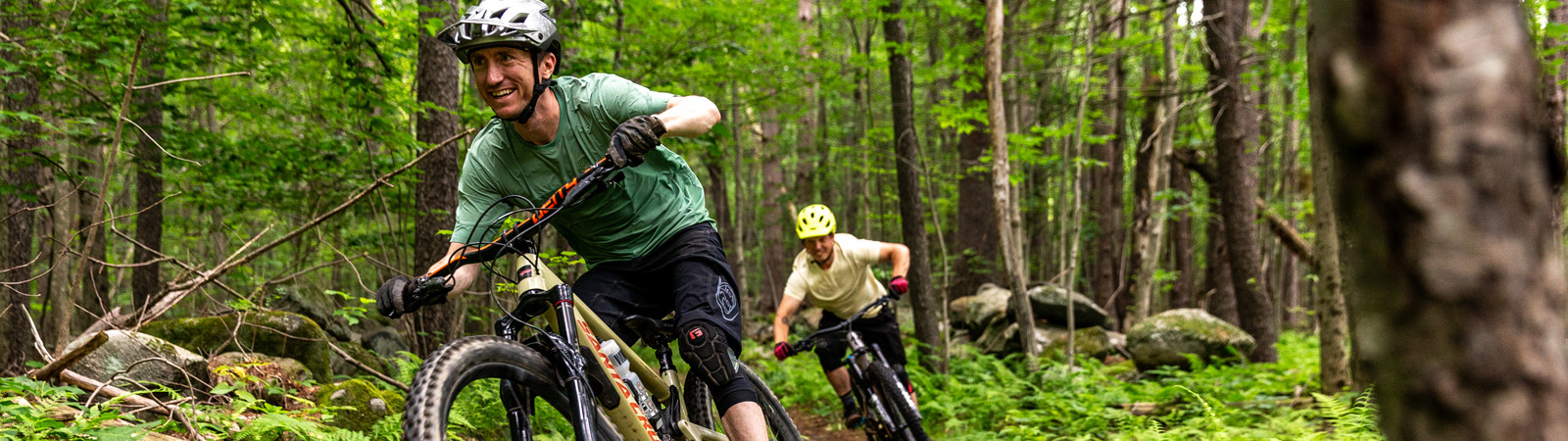
While rail trails introduce many people to cycling, North Central Massachusetts has also become one of New England’s strongest mountain biking destinations.
Much of that growth has been driven by the Wachusett chapter of the New England Mountain Bike Association (NEMBA), led by chapter president Sean Blood.
According to Blood, the region’s appeal begins with its diversity of terrain.
“You’ve got watershed areas with flowy, less technical trails,” he says. “Then you have places like Leominster State Forest with much more technical riding, steeper climbs, and plenty of rocks. The variety is incredible.”
Blood also points to the sheer size of the trail systems.
“There are expansive networks here—more than almost anywhere else in the eastern half of the state.”
Accessibility helps as well. Located within easy driving distance of Boston, Worcester, Southern New Hampshire, and Rhode Island, the region attracts riders from across New England.
Like many outdoor activities, mountain biking experienced significant growth during the pandemic as people sought opportunities to spend time outdoors.
“I think COVID really escalated people’s desire to connect with nature and get outside,” Blood says. “It became a way to socialize outdoors.”
He also believes mountain biking has gained popularity because many riders view it as a safer alternative to riding on increasingly busy roads.
The Rise of Gravel and E-Bikes
Mountain biking is not the only off-road option growing in popularity.
Gravel biking has carved out its own niche, offering a blend of road cycling efficiency and off-road capability.
“Gravel bikes have wider tires similar to mountain bikes, but they’re set up more like road bikes,” Blood explains. “They’re perfect for rail trails, dirt roads, and mixed-surface adventures.”
The region’s network of fire roads, rail trails, and rural back roads makes it particularly well suited for gravel riding.
Blood also credits modern bicycle technology for making cycling more accessible. Improvements in suspension systems have lowered barriers for new riders, while electric-assist mountain bikes have helped older cyclists remain active.
“People still want to be part of the riding community,” he says. “E-mountain bikes allow many riders to continue participating and enjoying the fellowship that comes with the sport.”
Building Community in the Woods
For Blood, however, mountain biking is about more than trails and technology.
“We’ve built a community of people who want to advocate for the outdoors, sustainable trail building, and fellowship on two wheels,” he says.
That spirit defines NEMBA’s work throughout the region.
The organization hosts weekly group rides, trail work days, educational programs, and advocacy initiatives. Volunteers regularly clear downed trees, maintain trails, construct bridges, and help develop new riding opportunities.
“We’re always happy to get out there and make trails accessible,” Blood says.
The chapter’s influence can be seen throughout North Central Massachusetts. Partnerships with municipalities, private landowners, the Massachusetts Department of Conservation and Recreation, and the U.S. Army Corps of Engineers have helped create and maintain trail systems in Barre, Leominster State Forest, the Ware River Watershed, and the Tully Lake region.
Technology also plays an increasingly important role. Blood recommends the Trailforks app for riders looking to explore local trail systems, check conditions, and discover new routes throughout New England.
For newcomers, his advice is simple:
“Don’t be afraid to fail. That’s how you learn. That’s how you get better.”
It is a philosophy that extends beyond cycling itself.
“I’m most comfortable when I’m uncomfortable,” Blood says. “If you can embrace being uncomfortable, it’s amazing what you can experience.”
And perhaps that captures the appeal of cycling in North Central Massachusetts. Whether you’re rolling along a quiet rail trail, climbing a rocky forest ridge, or exploring a gravel road you’ve never ridden before, the region rewards curiosity, adventure, and discovery.
For now, it may still be one of New England’s best-kept cycling secrets. But word is getting out.
Bike Shops Are The Hub Of The Cycling Community
Whether you favor rail trails, mountain biking, gravel riding, or the open road, your cycling journey in North Central Massachusetts often begins at your local bike shop.
Whether you need a tune-up, trail advice, equipment upgrades, or a new bike, the region is home to several outstanding shops serving everyone from casual rail-trail riders to dedicated mountain bikers and road cyclists.
Local Tip: Before heading out, stop by a local bike shop for the latest trail conditions, route recommendations, and insider knowledge. Shop owners and staff are often the best source for discovering hidden gems throughout the region’s growing network of roads, rail trails, and singletrack.
Local Bike Shops: Where to Gear Up
- Tomten Biketown (Leominster)
One of the region’s premier cycling retailers, Tomten specializes in mountain, road, gravel, and electric bikes, along with professional bike fitting and full-service repairs. The shop is a popular resource for both recreational riders and serious cyclists.
- The Break! Bicycle Shop (Fitchburg & Gardner)
A favorite among local mountain bikers and trail riders, The Break! offers bicycle sales, repairs, rentals, suspension service, and expert advice on the region’s extensive trail network.
- Funky Phoenix Bicycle Repair & Sales (Leominster)
Known for affordable options and personalized service, Funky Phoenix specializes in used bicycles, repairs, and helping new riders get started without breaking the budget.
- Hot Tubes (Shirley)
Recognized nationally for its custom bicycle paintwork and carbon-frame repair expertise, Hot Tubes attracts cyclists from across New England and beyond. The shop’s craftsmanship has earned a reputation throughout the cycling industry.
Why Local Bike Shops Matter
Bike shops do far more than sell bicycles. They help build the cycling community by connecting riders, supporting local events, recommending routes, and keeping cyclists safely on the road and trail. For visitors and residents alike, they remain one of the best gateways into North Central Massachusetts’ thriving cycling scene.