

Chasing Winter’s Catch A Guide to Ice Fishing in North Central Massachusetts
- Visit North Central
By John Burk
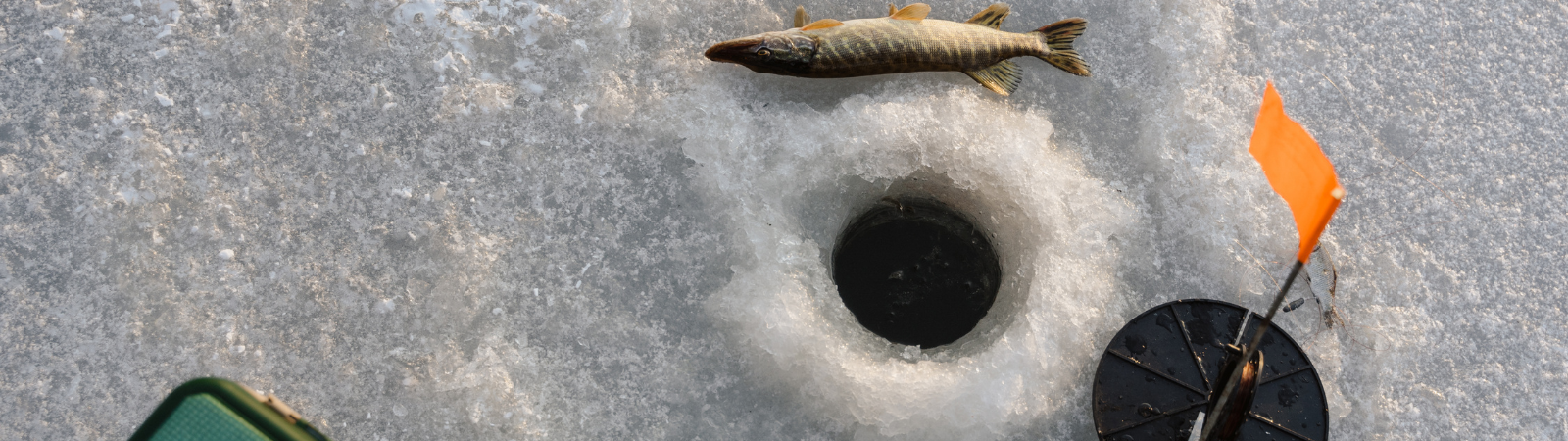
Ice fishing provides opportunities to enjoy fresh air, scenery, time with family and friends, and—with luck—a trophy catch or good meal.
A tradition with deep roots in New England, ice fishing has evolved from a means of survival to a popular recreational and social activity. For Native Americans, ice fishing provided crucial sustenance during winter. Contemporary anglers combine traditional practices and modern equipment such as motorized ice cutters, portable shelters, and electronic sonar devices that reveal locations of fish and topography of lakes.
Home to numerous lakes and ponds with easy access, North Central Massachusetts provides an outstanding destination for anglers during winter. Diverse aquatic habitats support a variety of warm- and cold-water game species including yellow perch, pickerel, large- and small-mouth bass, black crappie, bluegill, sunfish, and trout at locations stocked by the state.
Encompassing nearly four hundred acres in Athol, Orange, and New Salem, Lake Rohunta contains three shallow basins with an average depth of just four feet overall. Abundant weedy vegetation provides food and cover for large-mouth bass, chain pickerel, yellow perch, and other warm-water fish.
At Lake Dennison in Winchendon, ice fishing has been a popular recreational activity since the early twentieth century. With variable depths, clusters of aquatic vegetation, and two feeder streams, it offers productive fishing throughout winter for a variety of species such as rainbow trout, large-mouth bass, and sunfish.
One of the region’s best destinations for trout, Asnacomet Pond in Hubbardston usually freezes early and retains ice through late winter. Fed by springs, the pond’s cold oxygenated water and deep sections sustain populations of brown, brook, rainbow, and tiger trout, as well as yellow perch and black crappie.
In Harvard, Bare Hill Pond hosts a 320-acre warmwater fishery renown for quality specimens of large-mouth bass and yellow perch. Though most of the shore is privately owned, a town-owned parking area at the end of Pond Street provides access for anglers.
Interconnected Knops Pond and Lost Lake lie within a 204-acre impoundment in eastern Groton with clear water and large expanses of aquatic vegetation. During winter, anglers often catch yellow perch in shallow sections where bass and pickerel also thrive.
Prime opportunities for ice fishing occur in early winter, when species such as bass, perch, and panfish actively feed near shallow shorelines. As winter progresses, changes in oxygen, light, and food cause fish to reduce activity and move to deep water.
In late February and March, fish often return to shallow areas to feed and spawn.
Safe ice fishing requires a minimum of four inches of clear fresh ice for individuals and six inches for groups. Anglers should avoid rivers, streams, inlets, spring holes, and other places with active current.
Massachusetts regulations permit as many as five active hooks per angler through ice at one time. Anglers fifteen years or older must possess a valid freshwater fishing license.
Find more information, including water depth maps, details about fish populations, and directions, at Mass Wildlife’s Go Fish MA!
Ice Fishing Destinations
| Lake Rohunta Route 202, Eagleville Road Athol / Orange, MA | Lake Dennison 219 Baldwinville State Road (Route 202) Winchendon, MA |
| Tully Lake 2 Athol-Richmond Road (Route 32) Royalston, MA | Connors Pond Barre Road (Route 32/122) Petersham, MA |
| Asnacomet Pond 54 Old Boston Turnpike (Route 62) Hubbardston, MA | Dunn Pond 289 Pearl Street (Route 101) Gardner, MA |
| Paradise Pond, Leominster State Forest Fitchburg Road (MA 31) Leominster, MA | South Meadow Pond South Meadow Road Clinton, MA |
| Bare Hill Pond Pond Road Harvard, MA | Knops Pond and Lost Lake Whiley Road / Lost Lake Drive Groton, MA |