

The Christmas Bird Count
- Visit North Central
By Chris Coyle
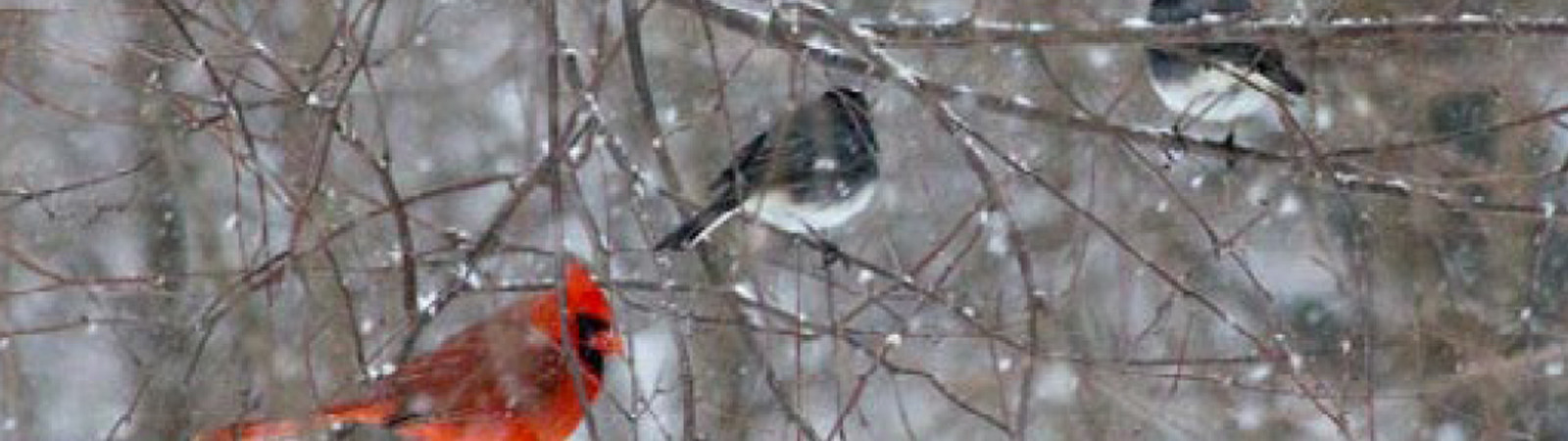
Looking for something interesting and fun to do during the Christmas season instead of shop ’til you drop? National Audubon’s Christmas Bird Count, coordinated by local compilers, might offer just the thing. The nation’s longest-running community science bird project takes place every year between December 14 and January 5.
Data collected on counts enable researchers, conservation biologists, wildlife agencies, and others to study the long-term health and status of bird populations. Vital Long-term perspective helps protect birds and their habitat and can identify environmental issues with additional implications for humans.
Before 1900, hunters engaged in a tradition known as the Christmas Side Hunt. After choosing sides, they took to the field with guns. Whoever brought in the most birds won. In an era when populations of waterfowl and songbirds diminished and such species as Carolina parakeets and passenger pigeons verged on extinction, the Christmas Day carnage comprised a big event.
In 1900, Frank Chapman offered an alternative: to see how many species and individual birds a team could count rather than killing them on Christmas Day. Chapman’s alternative gave birth to the annual Christmas Bird Count. That first count drew twenty-seven birders in twenty-five locations from New England to California. Taken up annually, the count became a major project of the rapidly growing National Audubon Society.
These days, volunteers walk, drive, or watch feeders to count total species and individual birds within a fifteen-mile circle. An area compiler coordinates specified routes that participants follow to count birds. The Audubon society also encourages people with homes within the circle to report sightings.
The count period includes three days before and after the posted date, so participants report any unusual sightings during those days to the compiler. Counts often begin before sunrise to locate owls and typically last until sundown.
The Athol Bird and Nature Club has sponsored a Christmas Bird Count since 1967. Participants cover territory in Athol, New Salem, Orange, Petersham, Phillipston, Royalston, Warwick, and corners of other towns. Repeat observers have learned of especially good locations for birds. In all, the most recent 2025 event accounted for 57 species and 6,485 individual birds. Highlights include an unusual flock of thirty evening grosbeaks in Petersham and several flocks of pine siskins.
Each year, a group of birders not affiliated with a club or organization counts birds in an area called Westminster Circle centering on the town’s Mare Meadow Reservoir and including parts of Ashburnham, Fitchburg, Gardner, Hubbardston, Princeton, and Templeton. That count usually takes place on New Year’s Day, frequently with snow on the ground and bodies of water which are frozen, increasing the challenge of finding birds.
The Groton-Oxbow count started in 2000 with its circle centered within the Oxbow National Wildlife Refuge in Harvard. Included in the circle are parts of the towns of Ayer, Devens, Groton, Harvard, Lancaster, Lunenburg, Pepperell, Shirley, and Townsend.
In 2025, the Groton-Oxbow count added three first time species—killdeer, black vulture and chestnut-collared longspur.
Anyone interested, regardless of skill level of bird identification, may join an area event at no cost. One may expect cold weather, lengthy driving, and possible walking with a detailed tallying of bird species at the day’s end along with a likely potluck and social gathering.
Participants bring binoculars, a field guide warm clothing, snacks, water, and a sense of adventure.