

Harvard Forest Ponders Fate of World Forests
- Visit North Central
By Sue Cloutier
A visit to Harvard Forest at 324 North Main Street in Petersham begins with a stop in the Fisher Museum. Miniature dioramas transport visitors through 230 years of landscape history and regional change.
A scavenger hunt sheet found in the entryway encourages a close look at each scene and encourages visitors to consider what it was like to live there in those times. The scavenger hunt asks, “Have things changed or is it the same today? What is happening in each scene?”
Dioramas focus on forest changes since colonial settlement with omission of contributions of indigenous tribes. To bring visitors that cultural awareness, the museum has planned a series of films that will share archival information about the surrounding landscape along with interviews with Nipmuc tribal people as they reflect on their relationship to the landscape. A Nipmuc artist and community organizer will co-curate the multimedia exhibit at Fisher Museum.
Harvard Forest started as a forestry school with the goal of finding the best way to grow trees for wood. Today’s questions concern that goal and much more. Researchers from around the world study what happens in forests and contribute to studies of scientists working at Harvard Forest. The hallway from the museum to other Harvard Forest rooms holds a few of the scientists’ findings: books and research publications, small displays, and postings about current activities. They make their research data collected since 1907 available for others.
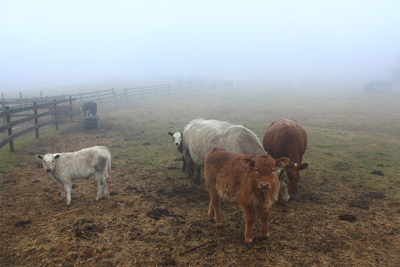
Cows graze in the early morning fog at Harvard Farm.
An obvious change in forests today concerns the death of hemlock trees caused by the woolly adelgid insect. Landowners ask if they should cut hemlocks now or let the hemlock die because of the insect. One study seeking answers looks at two similar hemlock plots, one harvested and the other left alone. Over fifteen years of study, the plot where hemlocks remained has standing hemlock trunks today and decaying hemlocks on the ground. That plot supported more biodiversity over time than the plot where hemlocks were harvested and the wood sold. Both plots ended up with the same dominant species—black birches. Calculating carbon storage, income, and other benefits in both hemlock plots may show significant differences over time. The study continues.
After Fisher Museum, it’s time to explore the woods at Harvard Forest following available trail maps in the entryway of the museum. Harvard Forest has more than thirty miles of designated trails. Signage on some trails encourages the hiker, just as the diorama do, to take time at specific places to notice things on the ground, at mid level, and at the tops of the trees. Hikers should stay on trails as they hike, because the woods constitute a research site. Walking off trail can impact data being collected. Dogs must be leashed and kept on the trail.
Manchage Manexit Reflective Trail
Half-mile Manchage Manexit Reflective Trail starts behind the museum and honors Nipmuc people. Signage explains a Native American way of walking trails and being with trees.
In Nipmuc, Manchage means place of departure and of marveling, and Manexit means to gather in departure and marvel together. Signage advises hikers to stop at each sign on the half-mile trail to consider the sign’s meaning. Harvard Forest protocol asks hikers on any trail to think of the others, including others who are trees and woodland creatures. Harvard Forest endorses the concept that humans—hikers—are part of living systems.
Manchage Manexit Reflective Trail occupies the same space as the The Harvard Forest Natural History Trail. The Natural History Trail goes through the same land that Jonathan Sanderson’s Farm occupies. This trail was established in the 1990s and highlights a colonial and post-colonial land-use history. Different views of history are provided in the same place by signs along the trail.
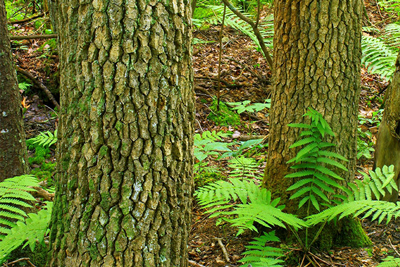
Centuries-old trees tower over Black Gum Swamp.
French Road Trail
French Road Trail constitutes a 2.5-mile loop with 17 numbered stations along the way. Yellow disc markers help hikers find their way, and signs point out aspects of surrounding woods. The brochure for the trail is available in the entryway of Fisher Museum or download from the Harvard Forest website. The brochure tells of recent changes in the land and about nearby plants and animals.
Harvard Forest has closed the 1.5-mile yellow-blazed Black Gum Trail to the public due to the hazard presented by dying hemlock trees.
Just as when we were children, we become scientists as we notice and question the what and why of things. Harvard Forest encourages visitors’ curiosity whether in the museum or the forest. Dioramas answer some questions. Museum docents, researchers, and websites also provide answers.